
Lagoon notebook · Venice
You arrive at the edge, then you start
Airport, train, bus, car. All of them stop where the water begins.
Venice has an airport, a railway station on the Grand Canal, a bus square, and a car terminus. None of them put you in San Marco. They put you at the western edge. From there the city is on foot and on boats.
Airport
Marco Polo sits on the mainland at Tessera. Buses run to Piazzale Roma. Alilaguna boats run into the lagoon and take longer than people hope. Taxis exist. We do not rank them. The useful fact is that you will still walk after you land, whatever vehicle you pick. Treviso is farther out. Coaches from there also end at the square. Budget the better part of an hour.
Train
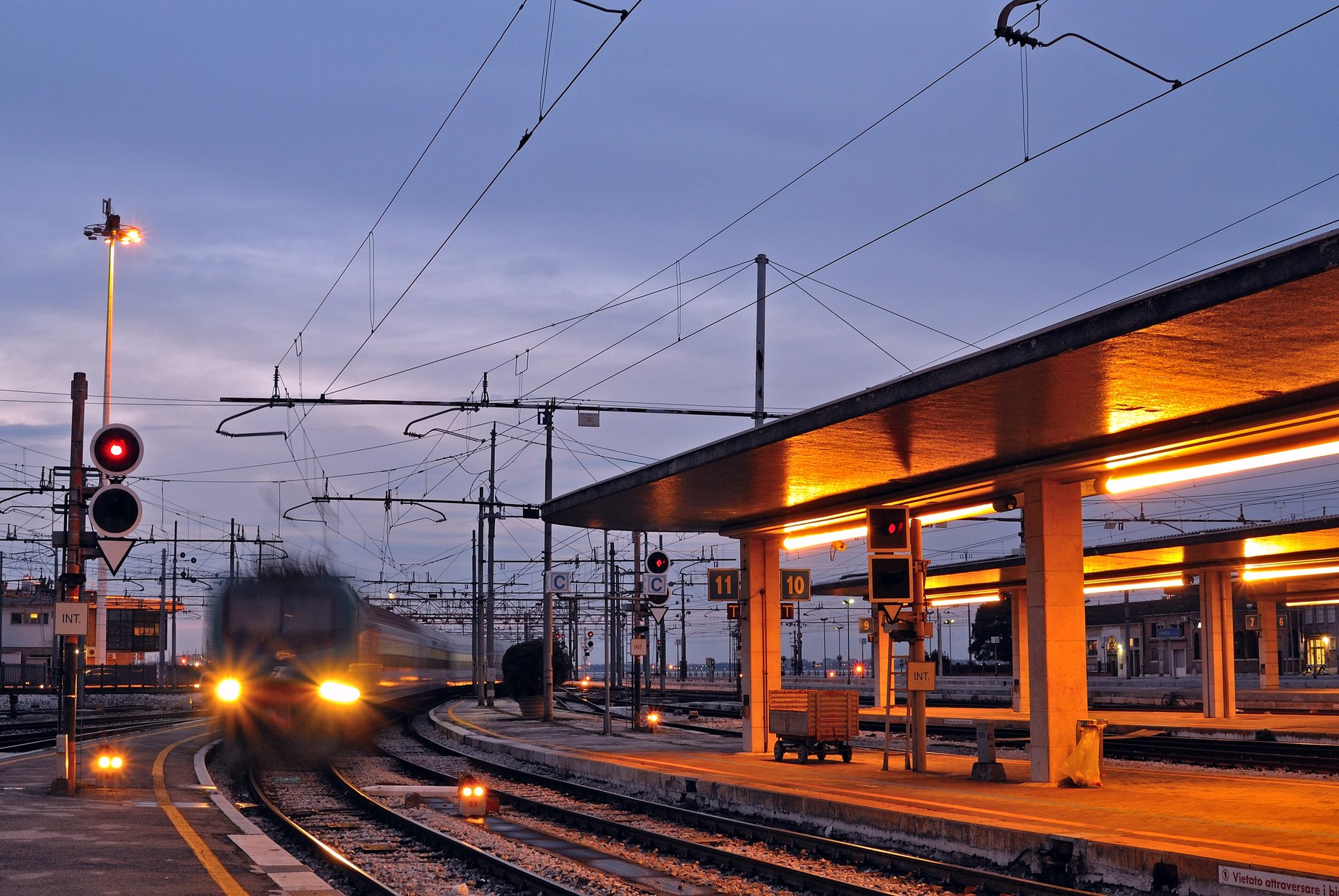
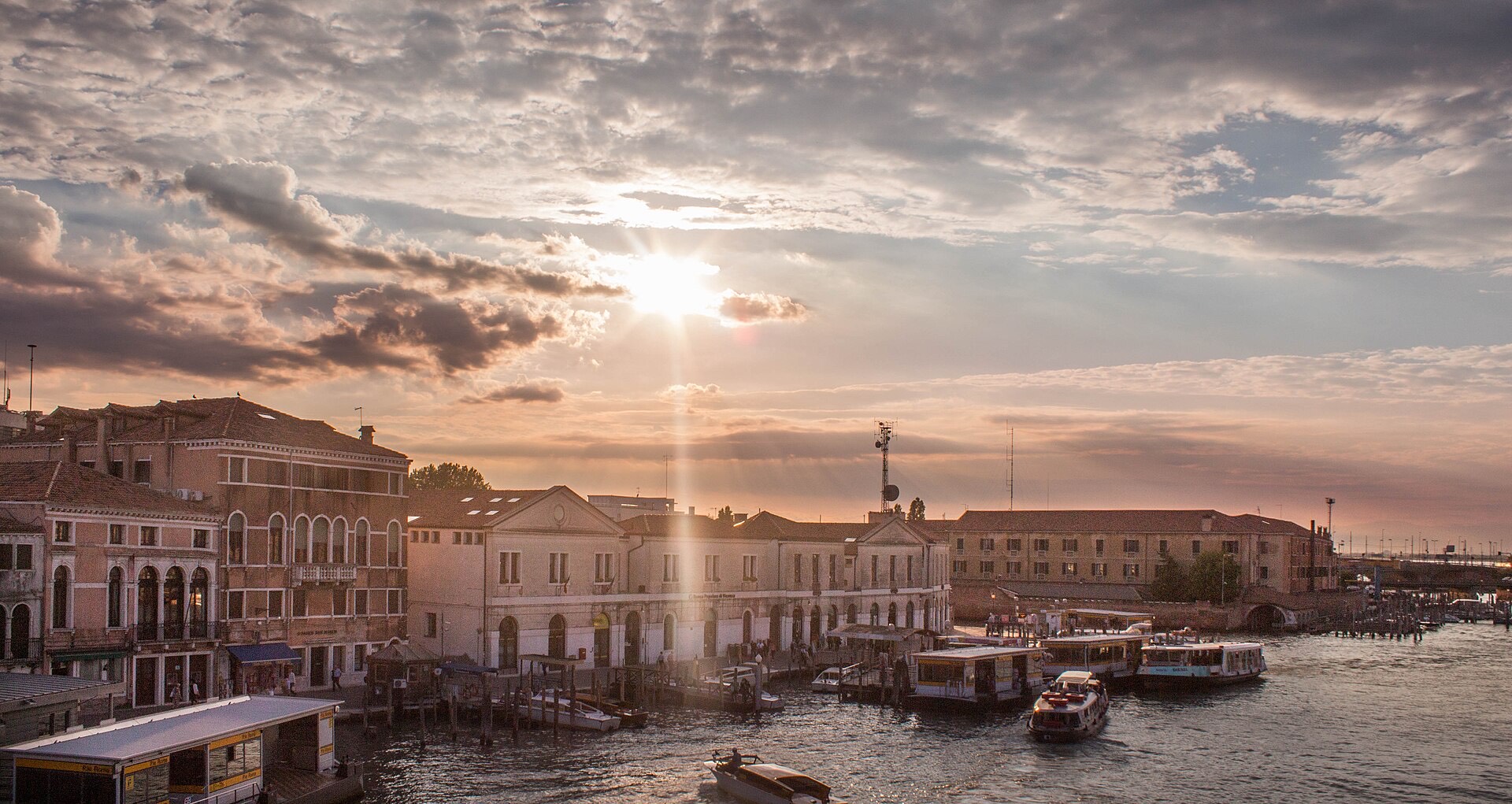
Santa Lucia is the station in the historic city. The facade faces water. Steps, porters, vaporetti at Ferrovia. Mestre on the mainland is the junction. Some trains stop only there. A frequent local train or a tram crosses to Santa Lucia in a few minutes. If you sleep in Mestre, that crossing is the daily commute.
Buses
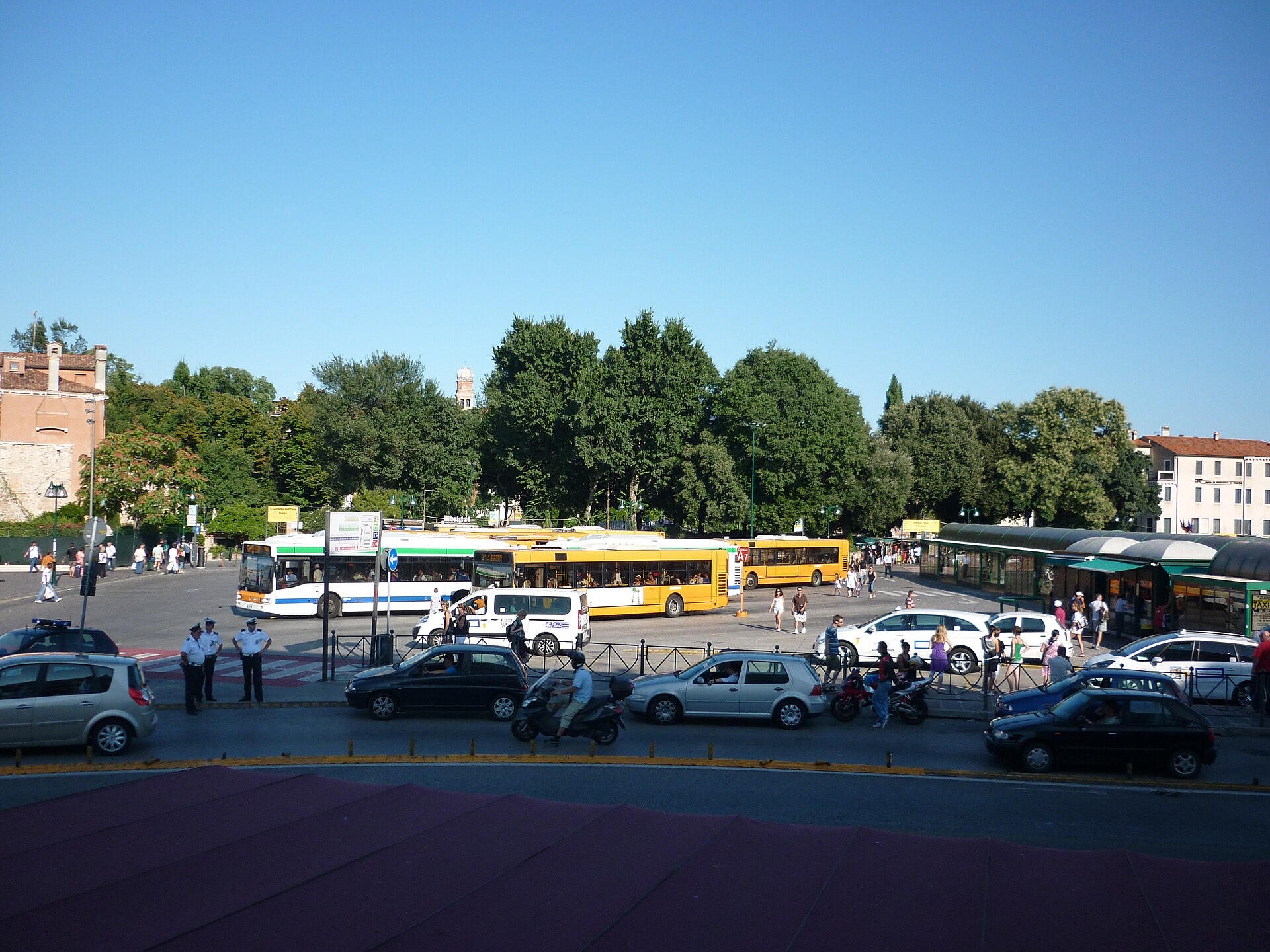
Coaches from the airport, from Padua and from elsewhere terminate at Piazzale Roma. So do city buses from Mestre. The square is a machine for arrival: garages, the People Mover track, taxi ranks, the first yellow signs.
Terminus
Where the road ends
The causeway ends. The square begins.
Private cars stay on the western rim. The historic centre has no carriageway for them.
- Piazzale Roma. The Ponte della Libertà puts you on this square. Walking and boats start here.
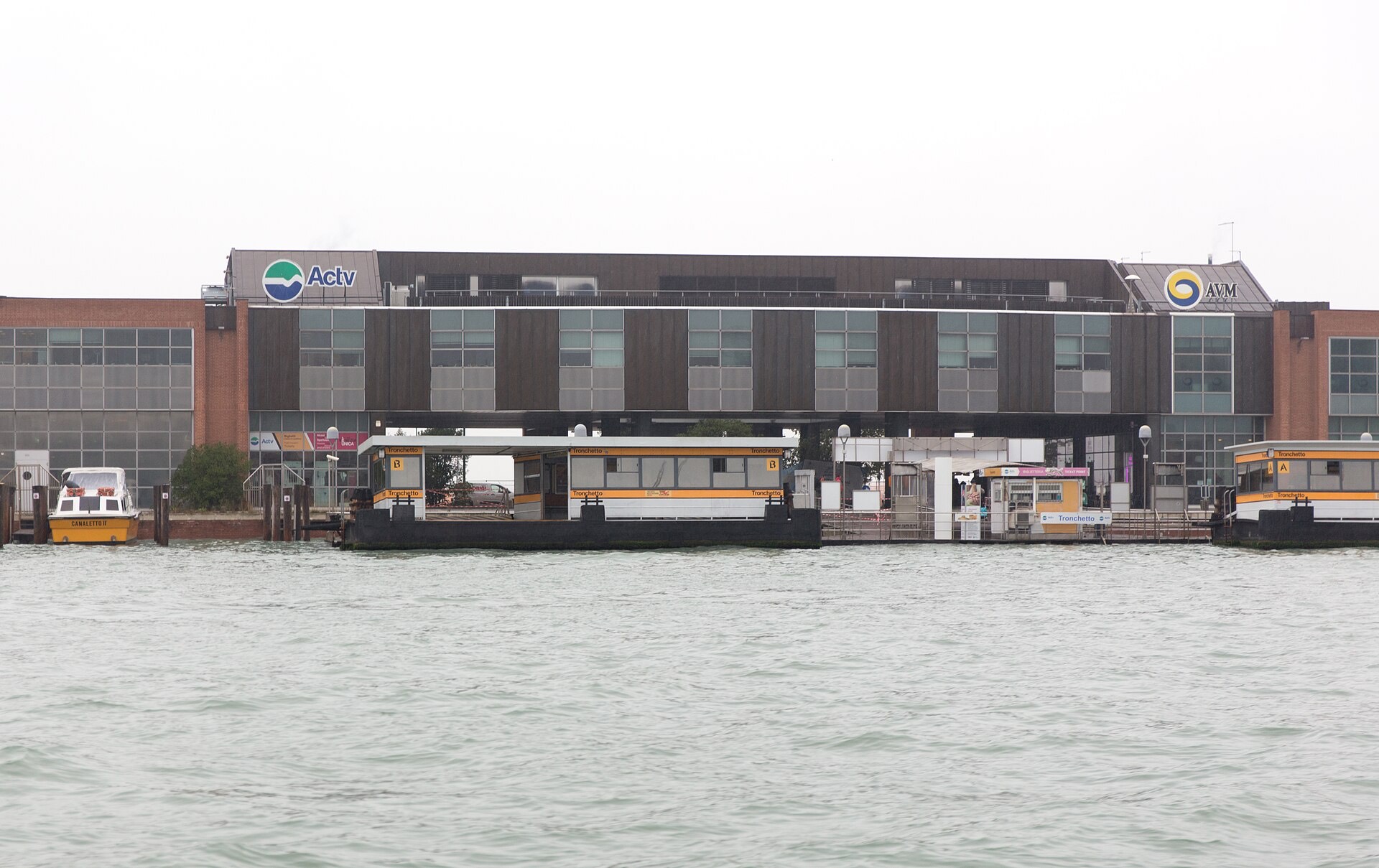
- Tronchetto. A made island west of the station, with a large covered garage.
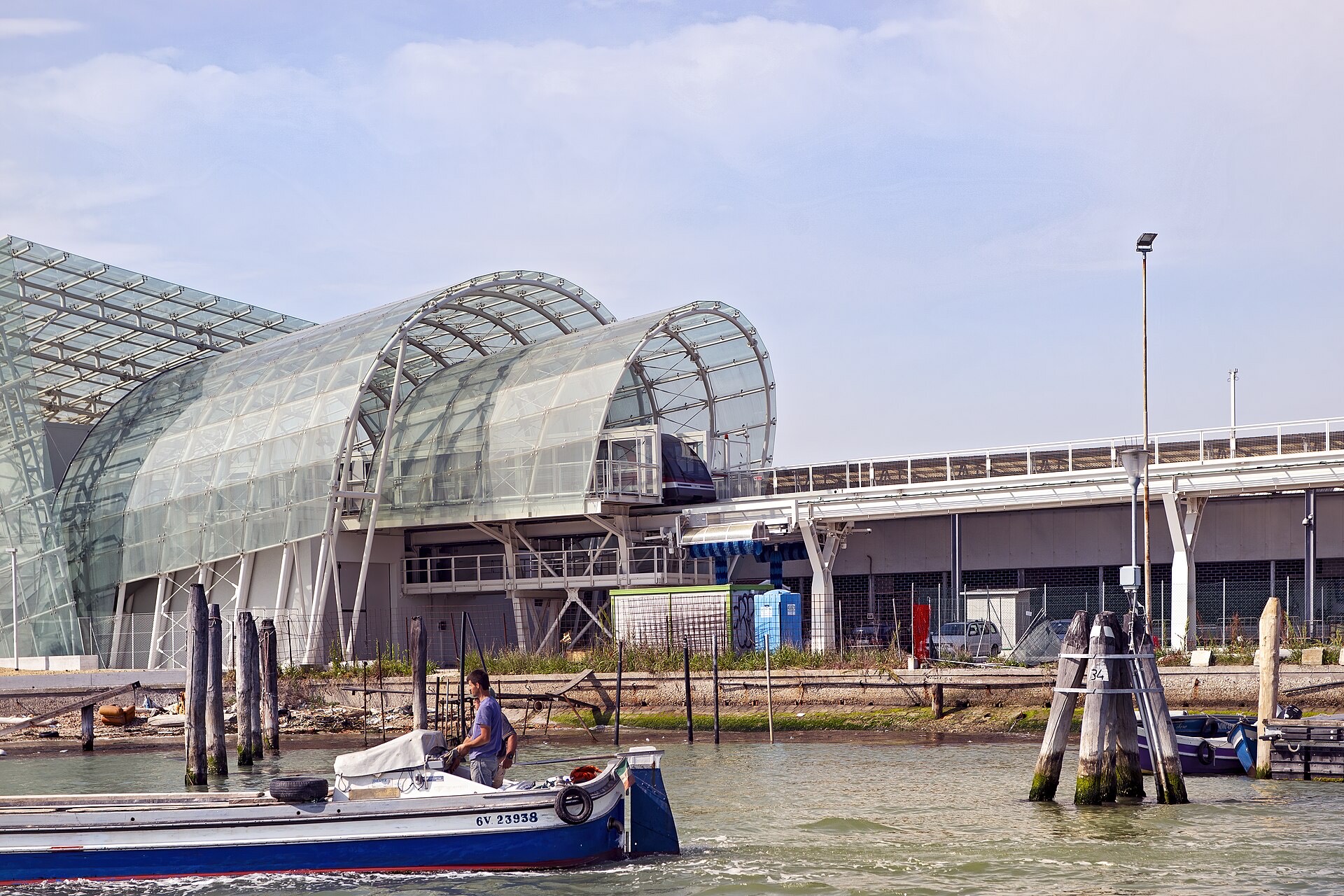
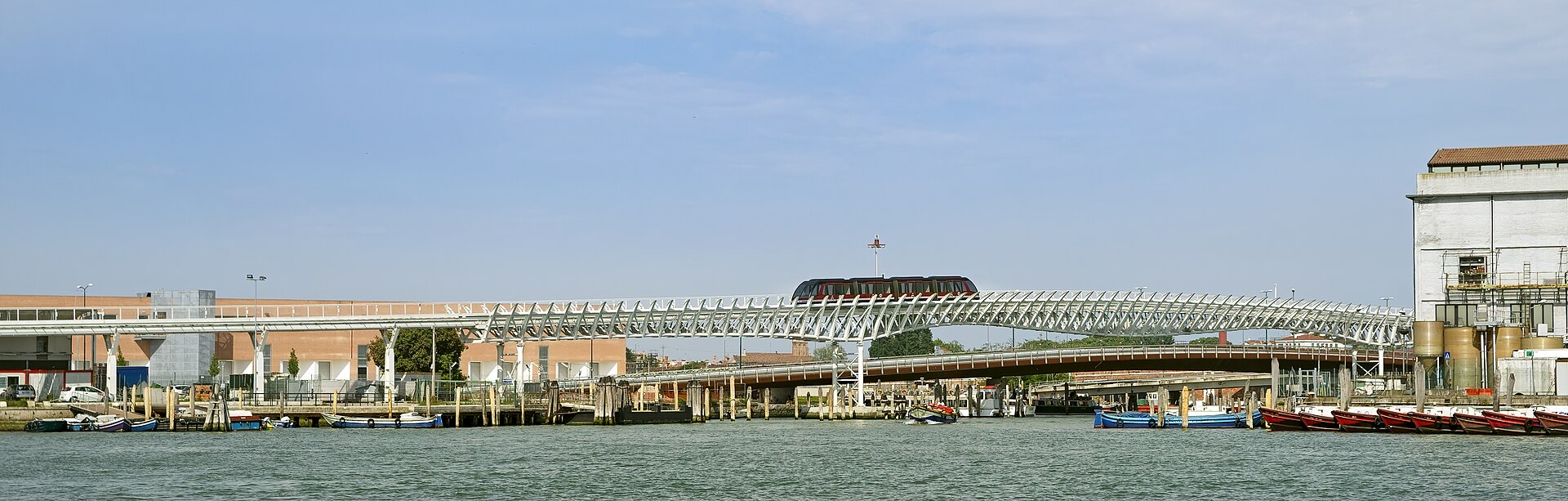
- People Mover. An elevated shuttle, a few minutes, from Tronchetto to the square.
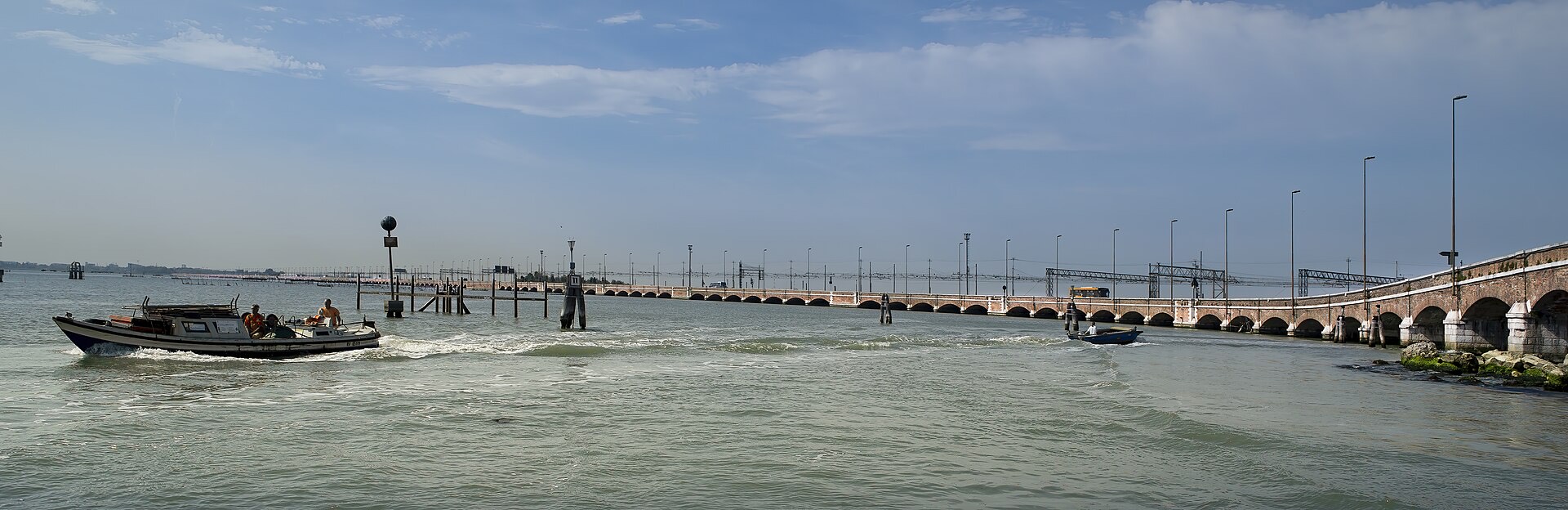
The causeway itself is the Ponte della Libertà, about 3.85 km, opened in 1933 and renamed after the war.
Piazzale Roma is the only point private cars reach in the historic city. Multi-storey garages, municipal and private, sit on the square. The city garage is the Autorimessa Comunale.
For Tronchetto, take the right branch before Piazzale Roma. The People Mover ride to the square takes a couple of minutes. Public boats also call at Tronchetto.
Campers and tall vehicles use the open lots on Tronchetto rather than the tight ramps at the square.
Some garages let you hold a space in crowded months. Treat that as optional, not a pitch.
Terminal garages work through the night. They have height limits. You leave the car and continue on foot or by vaporetto. Plenty of drivers stop in Mestre and cross by bus, tram or train.
Once you are on foot
From Piazzale Roma or Ferrovia the city is a web of calli. Yellow signs point to San Marco, Rialto and the Accademia. Trust them for the first hour. After that, follow a canal. The walking notes explain steps, boats and high water.
Wheeled luggage fights every stepped bridge. Pack as if you will carry the bag, because you will lift it again and again. Porters work at the station. We do not book them.
Short answers
Can I drive into the historic centre?
No. Private cars stop at Piazzale Roma or Tronchetto, or they stay in Mestre.
Is the People Mover a vaporetto?
No. It is a short elevated rail between Tronchetto, the Marittima terminal and Piazzale Roma. Boats are separate.
Should I stay in Mestre?
Some visitors do, especially with a car. You then cross by bus, tram or train. The historic city is a different place at night, which is the trade-off.